The workflow defines authority.
Inputs, context, tools, decision rights, review points, escalation paths, and stop conditions become explicit.
Thesis
For the last generation of business building, software was the operating layer. AI changes the question. The next durable companies will be built by redesigning how work moves through the business.

The old model
It made the work easier to find, route, record, and repeat. But the operating burden still sat with the human team. People interpreted the inputs, made the judgment calls, chased missing context, checked the work, handled exceptions, and carried the risk when something went wrong.
In that model, software improved productivity, but it rarely changed the basic shape of the business. Growth still required more people, more handoffs, more training, more supervision, and more informal knowledge held in the heads of the best operators.
The workflow was real, but it was mostly invisible.
The new model
AI can classify, extract, draft, compare, reconcile, monitor, route, check, and recommend. Humans bring judgment, taste, accountability, relationship context, and escalation control. Systems hold records, permissions, triggers, evidence, and downstream consequences.
The work becomes stronger when those roles are explicit.
That is the shift: not replacing a person with an agent, and not replacing software with a chat interface. The opportunity is to define the whole operating loop so each participant does the work it is best suited to do, inside controls the business can see and improve.
Agents are not enough
It is an unsupervised worker with unclear inputs, unclear authority, and unclear standards.
Inputs, context, tools, decision rights, review points, escalation paths, and stop conditions become explicit.
The business sets the quality bar, not the model. AI only becomes useful when the system knows what good work means.
Agents matter, but they only become economically useful when the workflow tells them what to do, when to stop, and how the business will know.
Observable by design
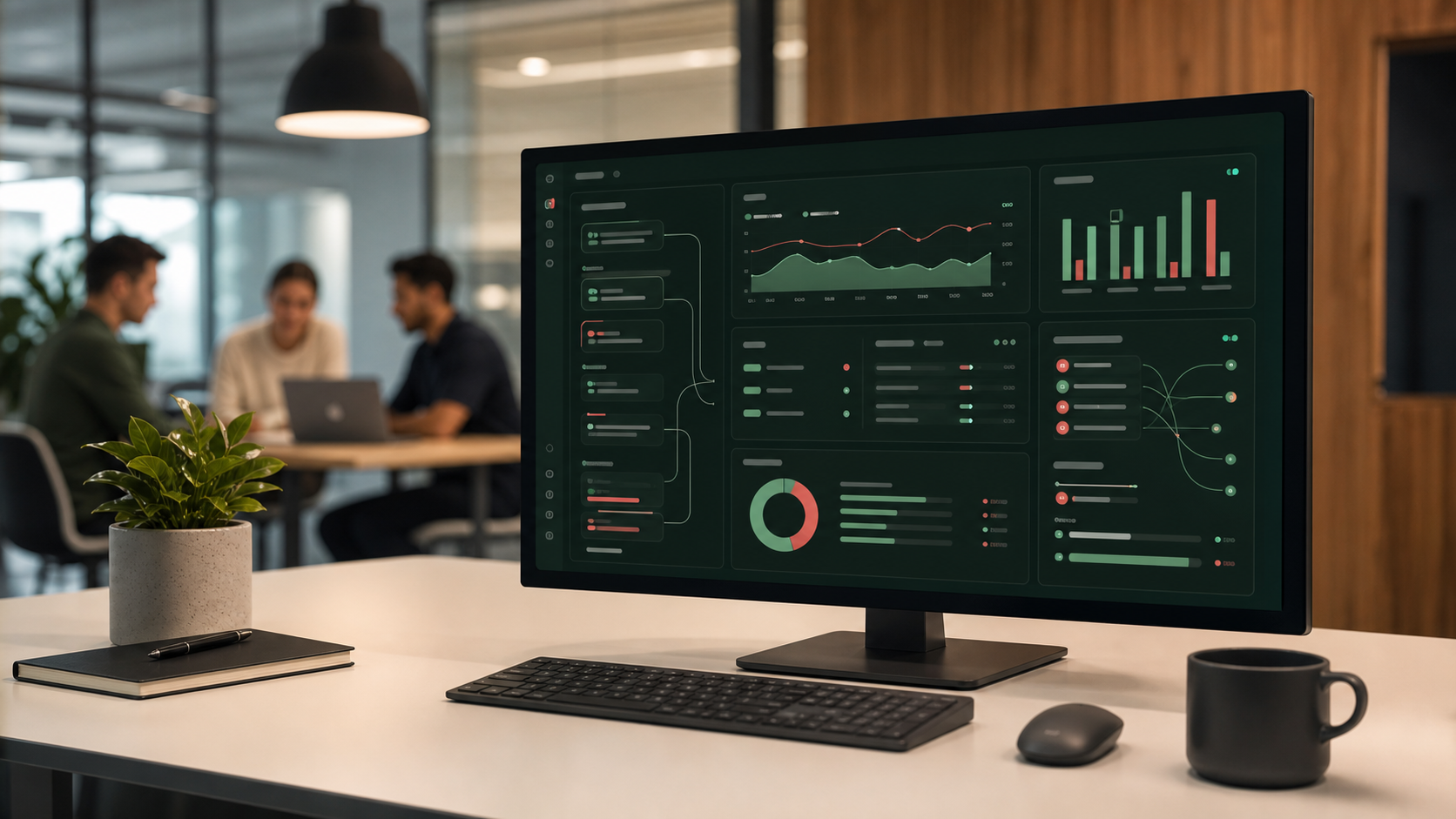
An AI-native workflow needs more than a final output. It needs a record of what happened: which inputs were used, which rules were applied, which system actions were taken, which exceptions were raised, which human decisions were made, and where the process succeeded or failed.
Observability turns AI from a black box into an operating asset. It allows leaders to measure cycle time, cost, quality, risk, exception rates, review load, and customer impact.
Without observability, AI may feel impressive. It cannot become dependable infrastructure.
Business-defined
Operators define the work to be done, the acceptable risk, the required evidence, the escalation rules, the customer promise, and the quality standard. AI can help execute within that frame, but it should not quietly become the frame.
This distinction matters. A business-defined workflow protects strategy from being flattened into whatever the model can most easily produce. It keeps accountability where it belongs. It makes automation a management decision, not a default setting.
What this unlocks
When workflows are business-defined and observable, AI can take on bounded parts of the operating load with real control around the result.
Work stops waiting in queues and starts moving through defined execution paths.
Repeatable judgment and coordination can be encoded into the workflow.
Review happens at defined points instead of through heroic cleanup.
The business can measure and reduce the cases that still require human intervention.