

Industries

We build in industries where workflows are hard, expensive, and ready to change.

Amalthea builds AI-native businesses around industry workflows that operators already know are broken: expert-led service chains with clear pain, repeated work, measurable outcomes, and a reason the old operating model cannot scale.

An aircraft wing seen through a window at sunrise
Find the pressure point. The right market has repeated work, fragmented systems, clear pain, and a buyer who feels the cost.

What makes an industry worth building in

We look for work that is valuable, repeated, constrained, and knowable.

  • Expensive manual work
  • Repeated documents, decisions, or exceptions
  • Fragmented incumbent providers
  • Clear customer pain
  • Human review or regulatory oversight
  • Measurable improvement in time, cost, quality, or capacity
  • A domain operator who knows what good looks like
A team workshop mapping a complex operating process

Legal

  1. Intake
  2. Extraction
  3. Risk review
  4. Exception routing
  5. Supervised advice
  6. Client delivery
  7. Matter history

Legal work is document-heavy, expensive, time-constrained, and highly structured. The opportunity is not replacing professionals. It is redesigning bounded, repeatable work around AI assistance, better review surfaces, preserved context, and accountable human judgment.

A passenger view from an aircraft window

Travel

  1. Intent capture
  2. Itinerary composition
  3. Supplier checks
  4. Booking support
  5. Payment coordination
  6. Disruption handling
  7. Post-trip service

Travel is operationally messy: suppliers, payments, timing, preferences, changes, and exceptions. AI can collapse parts of planning and servicing, but only if the workflow is observable and connected to real systems.

A customer payment interaction at a checkout counter

Payments

  1. Merchant intake
  2. Underwriting
  3. KYC/KYB checks
  4. Approval routing
  5. Settlement
  6. Reconciliation
  7. Monitoring

Payments operations are full of document review, exception handling, risk checks, and manual coordination. AI can improve speed and capacity, but auditability and control are non-negotiable.

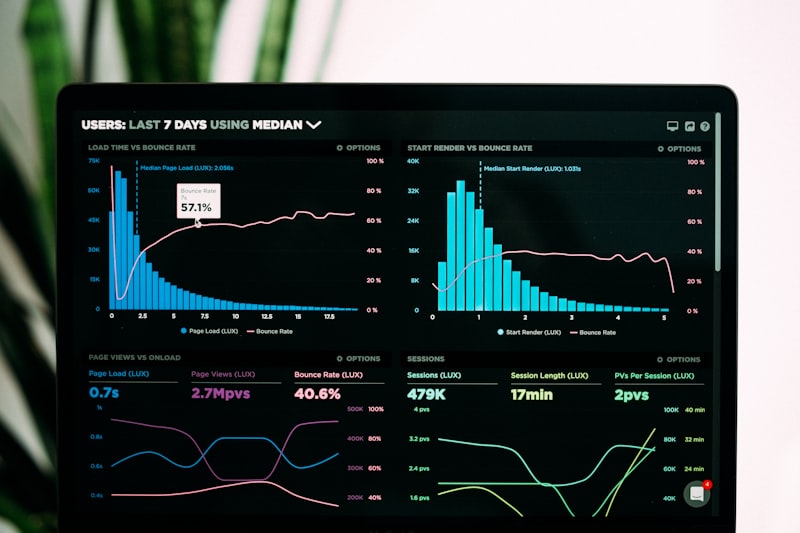
A dashboard showing operating data and metrics

Accounting and tax

  1. Document intake
  2. Classification
  3. Calculation
  4. Review
  5. Lodgement
  6. Reporting
  7. Exception handling

The work is repetitive, rules-based, document-heavy, and accountable. The best systems combine deterministic logic, AI-assisted interpretation, human review, and clear evidence trails.

A modern operating environment representing governance and controls

Compliance

  1. Monitoring
  2. Policy checks
  3. Evidence collection
  4. Exception routing
  5. Review
  6. Remediation
  7. Audit trail

Compliance teams do not need more dashboards. They need workflows that collect evidence, surface exceptions, preserve context, and show exactly what happened.

How Amalthea builds in these markets

We do not chase sectors. We look for workflow pressure.

A strong opportunity has a clear operating chain, a buyer who feels the pain, a measurable before-and-after, and a domain expert who can define what good work looks like.

From there, Amalthea designs the workflow, bounds the AI work, instruments execution, sets review points, and decides whether the opportunity should become an internal capability, a product, a service business, or a standalone company.

What we avoid

Not every AI use case should become a business.

We avoid vague automation briefs, generic chat interfaces, workflows nobody owns, systems that cannot be measured, and markets where the value depends on pretending AI can make unbounded decisions without governance.

The best opportunities have a narrow entry point and a broad expansion path. They begin with a workflow that should not work the old way anymore.

Know a workflow like this?

Talk to us